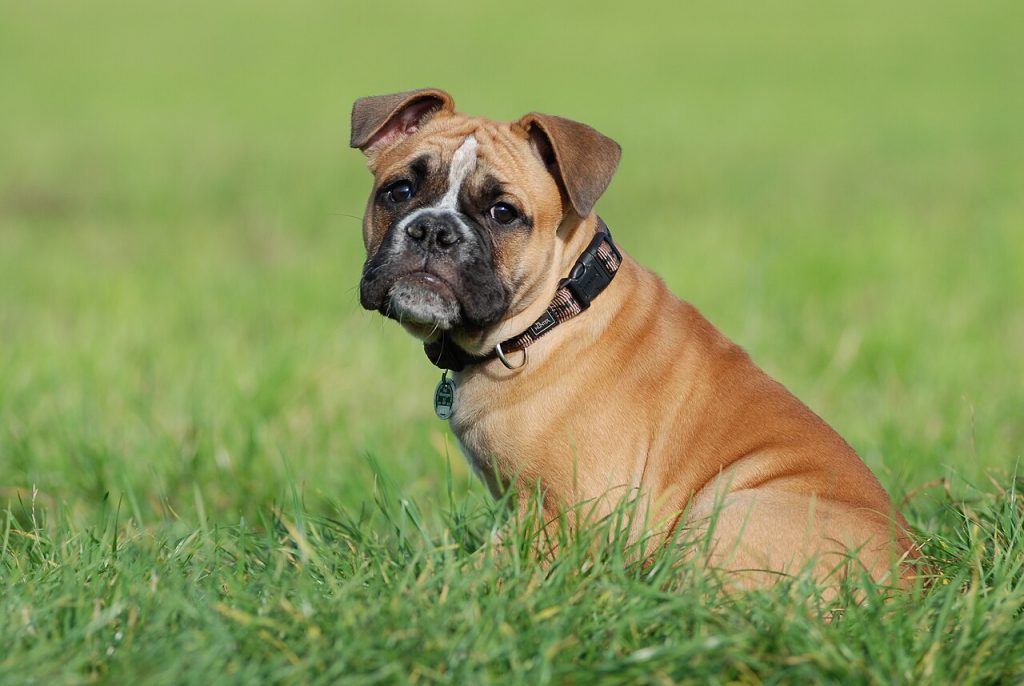
The Olde English Bulldogge is an athletic and muscular bulldog created in the United States to regain the functionality, health and longevity of the old working bulldog, without the respiratory fragility of the modern English Bulldog. Strong, balanced and surprisingly kind, it is a medium to large sized guard dog that combines the imposing appearance of the classic bulldog with a stable and familiar character.
Is the Olde English Bulldogge for you?
Before you fall in love with his bulldog face, you should understand what it means to live with a Olde English Bulldogge. It is a companion and guard dog that asks for presence, moderate exercise and a quiet hand. It is not hyperactive, but it is also not a “couch bulldog” unable to move: it was designed precisely to be able to work and run. These boxes summarize who fits and who does not.
It suits you if…
- You want to look like a bulldog but with a healthier, more active dog.
- You’re looking for a custodian who’s balanced, family-oriented and good with kids.
- You can give him two walks a day and some play, without demanding marathons.
- You value a quiet dog at home, low maintenance.
- You’ve committed to socializing him well since he was a puppy.
Think about it if…
- You live in a very hot climate without being able to control the heat and the stress.
- You spend a lot of time outdoors. Prolonged solitude is not good for you.
- You’re bothered by the snoring and the drooling and some loose hair.
- You don’t want to invest in firm training for a strong, territorial dog.
- You’re looking for an FCI or AKC-recognized breed with official pedigree on those records.
Character and temperament
The defining characteristic of the Olde English Bulldogge is its balance. David Leavitt deliberately sought a temperament much less aggressive than that of the ancient hunting dogs, and the result is a confident, courageous but non-conflicting animal that rarely seeks a fight. At home it tends to be affectionate, calm and very attached to its people, with that bulldogish mix of dignity and occasional antics.
He’s a dog of remarkable emotional stability. He is not easily upset, tolerates domestic distress, and is usually patient. At the same time he retains a strong guardian instinct: It watches its territory and warns of strangers without having to be a barking dog. With strangers he is usually reserved rather than hostile, and once he is sure there is no threat he relaxes. That combination of composure and family bond makes him a reliable companion, provided he receives socialization and leadership from a young age.
Coexistence: children, other pets, flat and loneliness

With children: is one of its great strengths. Its tolerance, its attachment to the family and its solidity make it a good companion of children, whom it usually endures with patience.
With other pets: is well socialized and coexists smoothly with other dogs and cats it breeds with.
On the floor: adapts well to apartment life because inside the house it’s quiet and restless. It doesn’t need a huge garden, just regular outings. Of course, its snoring and some drooling are part of the pack.
Soledad: is a very people-oriented dog and does not like to spend many hours alone. Prolonged loneliness can lead to boredom and anxiety.
Education and training
The Olde English Bulldog is intelligent and wants to please, but it also has the classic bulldog stubbornness. The key is positive reinforcement: rewards, play, and short, motivational sessions work much better than toughness, which only gets you in a band. It’s a tone and bond sensitive dog, not imposition.
Early socialization is nonnegotiable. Exposure from puppyhood to people, dogs, noises, and a variety of environments shapes the confident, sociable adult that the breed promises. It is good to set clear and consistent rules from day one, because a strong and somewhat stubborn dog needs to know what is expected of him. He patiently learns basic obedience well and enjoys simple mental challenges that channel his energy.
Exercise and activity
This is where the Olde English Bulldog differs from other bulldogs: it was created to be able to move. It needs moderate but regular exercise, about two walks a day plus playtime. It enjoys walking, pulling and loosening and activities that combine body and head.
As with any short-nosed dog, you need to balance your exertion with heat and humidity, avoid the middle hours of the day in the summer, and don’t force it when it gasps excessively. Overweight is its worst enemy: it aggravates any joint or respiratory problems, so maintaining a balanced weight with constant exercise is the best investment in your health.
Care: fur and hygiene
Their maintenance is simple. The hair is short, smooth and attached to the body, so a weekly brushing is enough to remove the dead hair and distribute the natural fat; in times of moulting it is appreciated to do it more often.
The focus is mainly on the folds and the face. Although it has fewer wrinkles than the English Bulldog, it is advisable to check and dry the facial folds to prevent dermatitis, clean the ears regularly and monitor the eyes. Brushing your teeth several times a week, cutting your nails when necessary, and checking your pads complete a very manageable hygiene routine. Be prepared for some drooling too, typical of the bulldog family.
Foodstuffs
As a muscular and compact dog, the Olde English Bulldog needs a high-quality, high-protein diet tailored to its size, age and activity level.
It is advisable to avoid overweight at all costs and limit the extra rewards. As a deep-breasted dog, it is prudent not to give him large amounts of blows or exercise right after eating, to reduce the risk of gastric torsion.
Health and life expectancy
Health is the raison d’être of this breed. The Olde English Bulldog was conceived to be healthier than modern-type bulldogs, and in fact researchers have singled it out as a valid candidate to introduce new genes into the English Bulldog, a breed so inbred that, according to genetic studies, it can hardly recover its health without new blood. Their life expectancy is around 10 to 13 years.
That said, he’s not a dog immune to trouble. It can be affected by some of the common ailments in any breed and, due to its morphology, it is advisable to monitor hip and elbow dysplasia, joint problems, allergies and skin dermatitis, and certain brachycephalic traits still present. Choosing a serious breeder who works on health, keeping weight in check, and taking care of heat are the keys to taking advantage of the longevity the breed promises.
Physical appearance
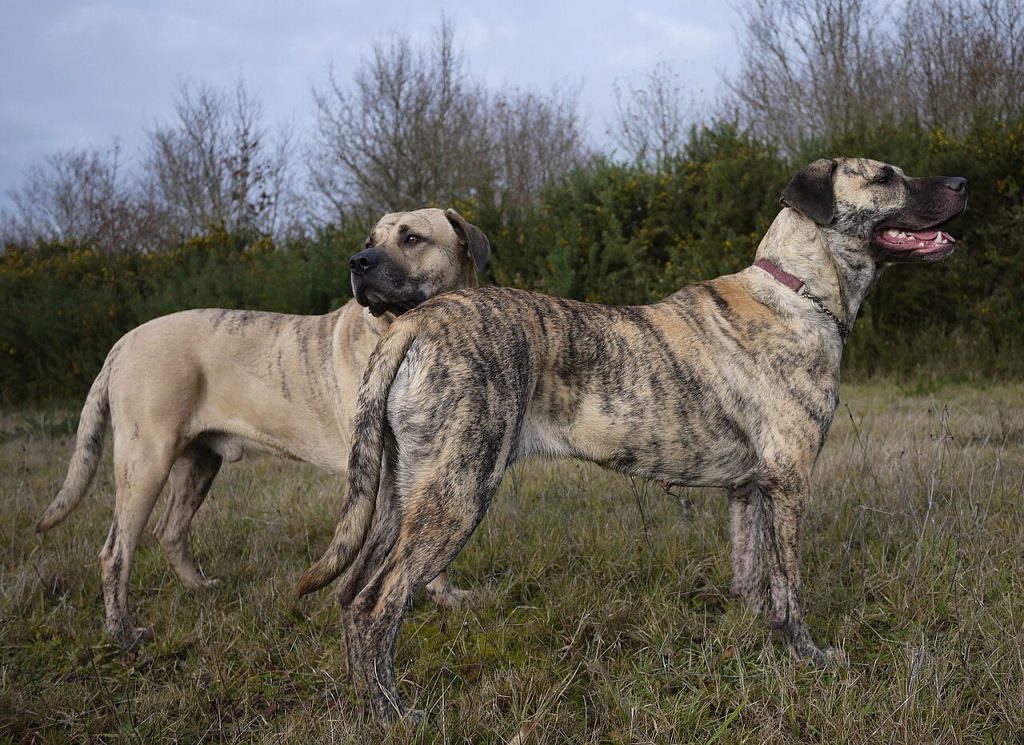
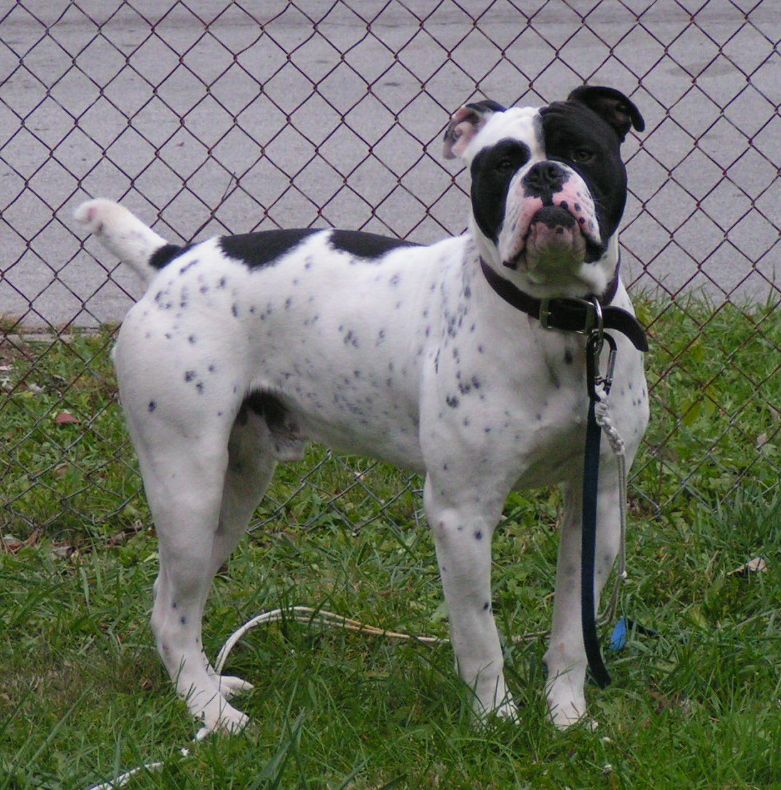
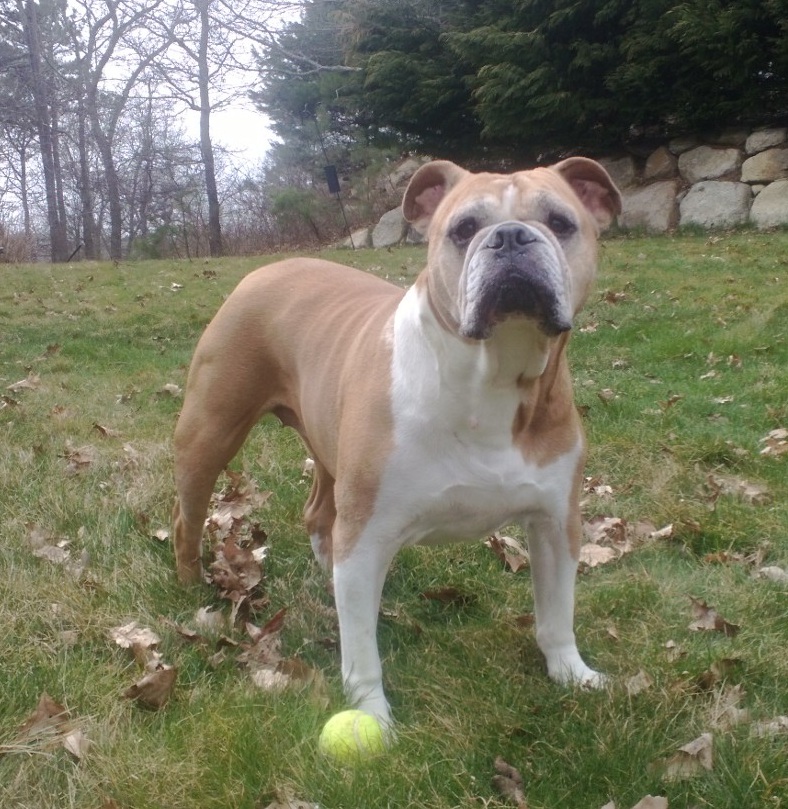
The Olde English Bulldog is a medium-sized dog, very muscular, with great strength and surprisingly agile and fluid movement. It is well balanced and proportionate, with the appearance of being able to work without respiratory restrictions in both heat and cold.
The head is large and well proportioned to the body, with a broad skull, a marked groove between the eyes, and a broad, deep, square snout. The bite is prognathic or inverted scissor. The eyes are medium-sized, almond shaped, dark brown to light brown, and the ears, small, are preferably pink. The body is robust, powerful and slightly rectangular when viewed from the side, with a broad, deep chest and well-muscled buttocks. The coat is short and supports the brindle pattern and solid colors, with or without white.
Origin and history
The story of the Olde English Bulldog begins in the early seventies in Coatesville, Pennsylvania, with breeder David Leavitt. His aim was to recreate the 18th-century British Isles bulldog, the athletic dog used in the ancient sport of bull baiting, but retaining health and ruling out aggression. To accomplish this quickly, he adapted an online breeding scheme developed for cattle by Professor Fechimer of Ohio State University.
The foundation crosses combined approximately one-half English Bulldog, one-sixth American Bulldog, one-sixth Bullmastiff and one-sixth other breeds. After many planned litters, a dog that resembled the bulldogs of 1820 but with a gentle temperament, fewer health problems, and greater longevity emerged. Leavitt founded the Olde English Bulldogge Association to manage the book of origins; in 1993 he retired and gave up the registry. In 2004 he renamed his own line Leavitt Bulldog to differentiate it from that of other breeders, who continued under the name Olde English Bulldogge. The United Kennel Club officially recognized the breed on January 1, 2014, within its group of watchdogs.
Curiosities
- The archaic spelling “Olde” and “Bulldogge” is intentional: it evokes Old English and the historical bulldog that the breed wants to honor.
- Leavitt was inspired by a breeding method intended for cattle, not for dogs, in order to fix the desired traits in a few generations.
- Science has proposed it as a “viable candidate” for genetically rescue the English Bulldog, too inbred to heal on its own.
- The creator himself ended up separating his line with the name Leavitt Bulldog, so that today two names for dogs of common origin coexist.
- Many Swiss breeders have used it to create the Continental Bulldog and adapt the bulldog to the country’s strict animal welfare laws.
If you are attracted to this athletic and well-balanced bulldog, you may be interested in other breeds with strong air and a familiar temperament. You can compare the Olde English Bulldog to the classic Bulldog Inglés from which it descends, to the popular Bulldog Francés, to the energetic Bóxer or to the imposing Cane Corso, another moldy keeper of great presence.
Frequently Asked Questions about the Olde English Bulldog
Is the Olde English Bulldog an English Bulldog?
Although it shares ancestry and appearance, the Olde English Bulldog is an American breed created in the 1970s by David Leavitt by crossing English Bulldog, American Bulldog, Bullmastiff and other breeds.
Is the Olde English Bulldog having trouble breathing?
The standard requires a dog that is able to move and exercise without respiratory restrictions, with a slightly longer snout and fewer wrinkles than the English Bulldog, yet retains moderate brachycephalic traits, so avoid extreme heat and overweight, and choose breeders that prioritize respiratory health.
Is he an aggressive or dangerous dog?
Not naturally. Leavitt deliberately sought a friendly and stable temperament. Well socialized, the Olde English Bulldog is usually affectionate, quiet at home and protective without being conflicted. Like any strong dog, it needs early socialization and consistent guidance to manage its territorial character.
How long does an Olde English Bulldog live?
Their life expectancy is around 10 to 13 years, considerably longer than many modern-type bulldogs. Selection towards health and reduction of inbreeding are part of the purpose of the breed, although specific longevity depends on the breeder, feeding and maintenance of ideal weight.
How much does he weigh and measure?
Males weigh between 27 and 36 kg and measure 43 to 51 cm at the withers; females weigh between 23 and 32 kg and measure 41 to 48 cm. It is a medium-sized dog, very muscular and compact, with more mass than its height suggests.
Do you need a lot of exercise?
It needs moderate and regular exercise: a couple of daily walks and some play are enough to keep it in shape. It is athletic for a bulldog, but it is not an endurance dog. The effort must be dosed with heat and not forced on puppies or overweight specimens.
Is he recognized by any dog association?
The United Kennel Club (UKC) recognized it as a breed on January 1, 2014, and it is part of the Guardian Dog Group. It is not recognized by the FCI or the AKC.
Is he a good dog for families with children?
It is tolerant, attached to its family and temperamentally balanced, which makes it a good companion for families with children.