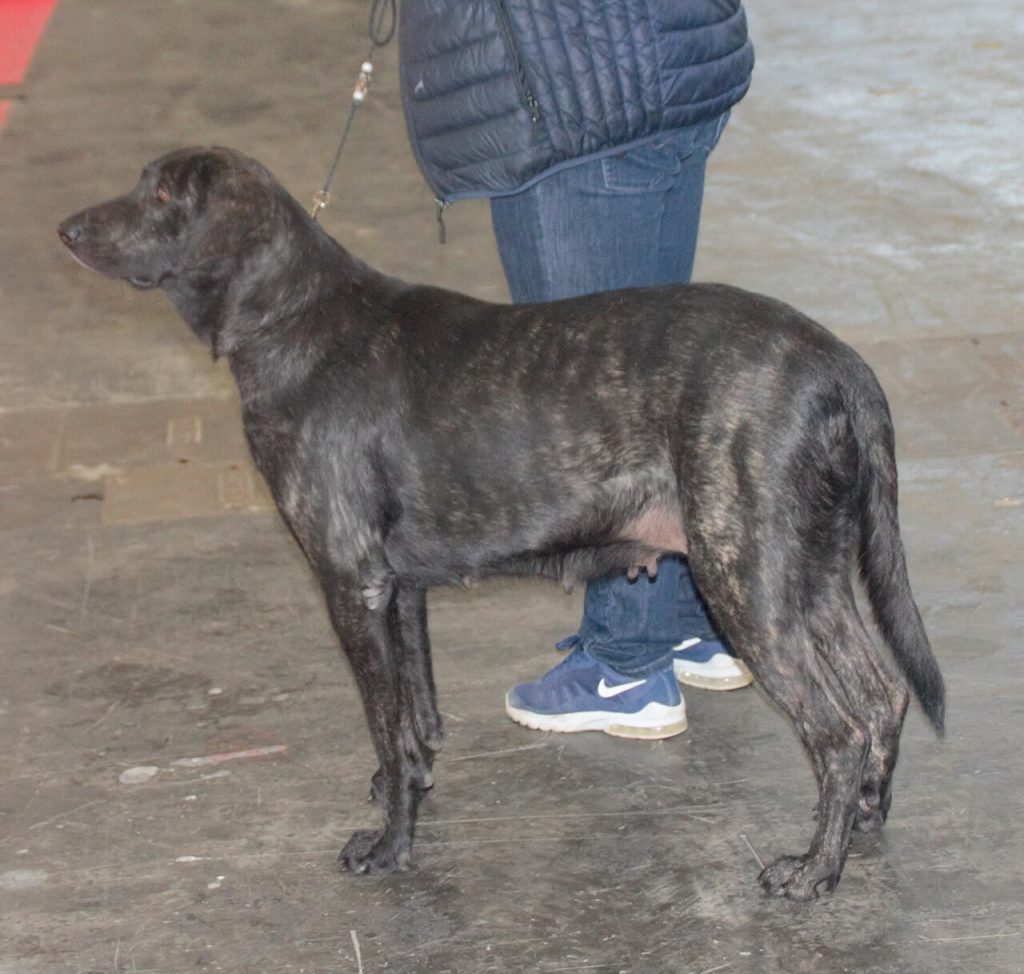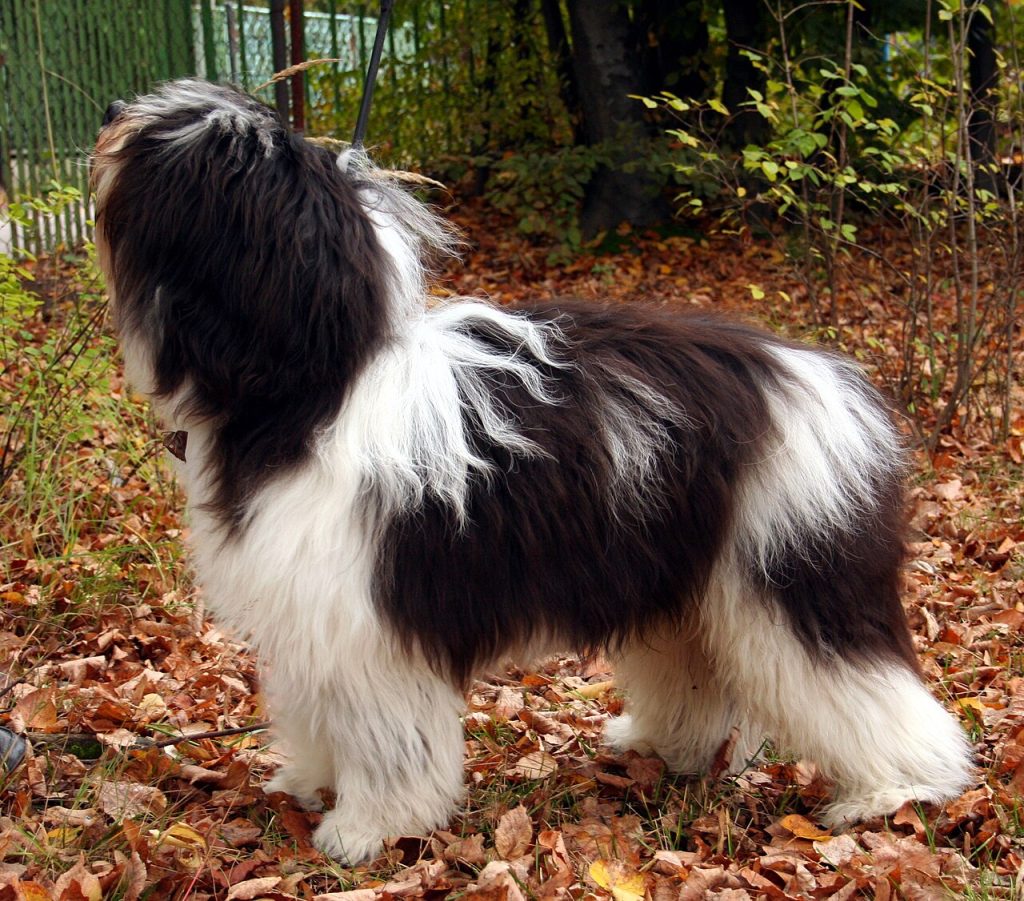
The Polish Shepherd of the Plains(Polish Polski Owczarek Nizinny, abbreviated PON) is a medium-sized woolly sheepdog, originally from Poland, famous for its dense coat that covers its eyes and for a quick, confident and deeply attached character to its family. Compact, tough and with centuries of working with the cattle on his back, today he is above all an excellent companion dog: adaptable even to life on the floor, affectionate with his own and with a memory and intelligence that surprise the first educator.
Is the Polish Shepherd of the Plains for you?

Before you get carried away by its plush appearance, it’s worth seeing firsthand what it means to share life with a Polish Shepherd of the Plains. It’s a working dog in the body of a sofa companion: it asks for involvement, brushing time and a calm but firm educating hand. If that suits you, it will give you a hard-to-match loyalty.
In favour .
- Very affectionate and close to his family, good companion dog.
- Intelligent, with excellent memory and great learning ability.
- Adaptable: gets along well with life on the floor if he exercises.
- Medium manageable size and considered a healthy and long-lived breed.
- Good warning dog, watching what’s going on at home.
To be taken into account
- Long and double coat: frequent brushing is compulsory.
- Clever and characterful; dominates the insecure or fickle owner.
- He needs daily exercise and mental stimulation.
- Shepherding instinct: tends to group and chase.
- He can become a barker if he is bored or spends too much time alone.
Character and temperament
The Plains Polish Shepherd is defined, first and foremost, by being stable and self-confident. He ‘s not a nervous dog , he ‘s not scared . Observe, calculate and act with composure. That serenity, coupled with a truly remarkable memory, makes him a fast learner who remembers both the good and the bad of each situation. He who treats it consistently gains a reliable companion; he who is incoherent discovers that the dog does not forget the slip.
With his family he is affectionate, attentive and often clingy in a good way: he likes to be where his own are and participate in the life of the house. At the same time he retains a point of independence inherited from the work in the field, where the shepherd had to decide for himself away from the cattle herder.
It is also a vigilant dog. Its warning instinct is well developed and usually announces any news, which makes it a good alarm guard without falling into aggression. Well socialized, it combines that alertness with a calm sociability towards people and animals that are part of its environment.
Coexistence: children, other pets, flat and loneliness

The Polish Plains Shepherd is, by nature, a family dog. He usually treats children well, especially when he grows up with them, and he enjoys being part of the group. His herding instinct may come in the form of attempts to group the smaller ones or to chase them as they run; it is not aggression, but work turned into play, and it is corrected by teaching him from a puppy when to stop.
Since it is a farm dog accustomed to sharing space with animals, it tolerates canine companionship well and usually accepts cats with which it has been raised.
In terms of habitat, this is one of the great advantages of the breed: it fits very well on the floor.. In his native Poland he’s a classic flatmate. The key is not in the square footage, but in meeting your daily need for exercise and stimulation. As for loneliness, the PON is a very attached dog and does not like to spend many hours alone: Boredom and separation anxiety translate into barking and destructive behavior. It’s a dog for whom I can devote my presence and company.
Education and training
Training a Polish Plains Shepherd is, on paper, simple: it is smart, has an excellent memory and enjoys learning. In practice, the challenge is not its ability, but its character. This dog works delightfully with those who convey security and consistency, but it tests. to those who hesitate. Therefore, education should begin early, with clear and stable rules.
It works very well with positive reinforcement: prizes, play and a gentle voice give better results than toughness, which with this breed is counterproductive and damages trust. Short, varied, and entertaining sessions keep his attention; monotonous repetitions bore him. It is also advisable to care for the socializing during the first months, positively exposing it to people, dogs, noise and different environments so that its natural safety does not lead to distrust.
Exercise and activity
The Polish Plains Shepherd needs a level of exercise moderate but constant. It is not a dog of extreme endurance nor does it ask for daily marathons; one or two good walks a day, playtime and some mental work are enough for it. Now, that minimum is not negotiable: it is a working dog and, without activity, channels its energy into barking, wrecking or obsessive behaviors.
Where it really shines is in activities that combine body and head. Its pastoral origin and ease of learning make it suitable for the agility, obedience, the rally, the flyball, the crawling and, of course, the herding tests, in which it still demonstrates the instinct it carries engraved. These disciplines not only keep it in shape: they strengthen the bond with its owner and give it the occupation that its mind demands.
Care: fur and hygiene
The mantle is the Polish Plains Shepherd’s hallmark and also their main demand for care. This is a double coat: a soft, dense insulating inner layer, and a long, rough, smooth or wavy (never curly) outer layer, which may be of almost any colour. That abundant hair, which on the head falls over the eyes and optically enlarges the skull, tends to tangle easily.
The practical consequence is clear: frequent brushing, ideally several times a week, to untie knots before they become mats. Instead, it is not a breed that “scatters” hair all over the house in a massive way, because much of the dead hair is retained in the mantle and must be removed with the brush. In addition to long hair, care must be taken of the surroundings of the eyes, ears, and pads, as well as bathing regularly when really needed. A colorful fact: It is usual that the color will clarify or change as the puppy becomes an adult.
Foodstuffs
As a medium-sized and moderately active dog, the Polish Plains Shepherd has no exotic needs, but it is advisable to adjust its diet well.
The main thing is the usual: measured rations to avoid overweight, water always available and avoid excess prizes and leftovers. Its dense coat can hide a few extra kilos, so it is worth monitoring the condition of the body with touch and not only with the eye. When in doubt about the quantities or type of food, the most sensible thing is to rely on the veterinarian’s judgment.
Health and life expectancy
Overall, the Polish Plains Shepherd is a robust very healthy breed, the result of a rustic working dog past.
As with almost all breeds, there are two recommended checks before assigning a dog to breeding: The hypoplasia of the hip review and eye exam to rule out anomalies like the progressive atrophy of the retina (PRA). Choosing puppies from responsible breeders who do these breeder tests is the best way to keep the breed healthy. Apart from that, basic care – vaccination, deworming, regular veterinary checkups, dental hygiene, and weight control – complete a long and healthy life.
Physical appearance
The Polish Plains Shepherd is a medium-sized muscular and compact dog, with an unmistakable image for its abundant coat.[1] Males measure between 45 and 50 cm to the cross and females between 42 and 47 cm.[2] In terms of weight, males are around 40-50 pounds (about 18-23 kg) and females around 30-40 pounds (about 14-18 kg), although the hair makes it appear larger than it actually is.
Its body is practically square, although the profusion of hair on the chest and on the hind train gives it a slightly rectangular appearance; the ideal ratio between height and length is 9:10(a 45 cm tall dog measures about 50 cm long). The double coat can have almost any color or pattern, with white, gray and brown being the most common, with darker markings. The tail may be very short at birth; historically it was cut in some countries, but in much of Europe cutting is prohibited and today it is common to see specimens with tails of different lengths.
Origin and history
The Polish Plains Shepherd is an ancient breed. It has been known in Poland in its current form since at least the 13th century, and most likely descended from ancient herding dogs related to the Hungarian Puli and Other cattle. For centuries it was the working dog of the shepherds of the Polish plains, a reliable helper capable of managing the herd throughout the day thanks to its moderate build and endurance.
World War II almost wiped out the breed, which was nearly extinct. Her recovery is largely due to the work of Dr. Danuta Hryniewicz and, most especially, her dog Smok(“Dragon”), considered the ancestor of all PONs in the world today. Smok, of exemplary anatomy and temperament, bred the first ten litters of the breed in the 1950’s and set the type for generations of breeders to follow. From it the first official standard, recognised by the FCI in 1959, was drafted. Decades later, in 2001, the American Kennel Club admitted it into its Shepherding Group.
Curiosities

- The “father” of the breed has a name: Smok, Dr. Hryniewicz’s dog, is the common ancestor of all modern PONs.
- Distinguished kinship: legend has it that the Polish Shepherd of the Plains was one of the ancestors of the Bearded Collie, with whom he shares that characteristic woolly air.
- The bang is not just aesthetic: the hair that covers its eyes protects the view from the sun, rain and wind of the countryside, and many specimens see perfectly through it.
- It changes color as it grows: is common for the puppy’s tone to lighten or twist as it grows into an adult, so the dog you bring home may end up having a different color.
- Elephant memory:‘s excellent memory is a double-edged sword; it learns fast, but it also remembers handling errors, so consistency is everything.
If you are attracted to the shepherdish, intelligent, furry profile of the Plains Polish Shepherd, you may be interested in other working breeds with which it shares character or functions. The Border Collie shares its shepherd origin and its enormous intelligence; the Shetland Sheepdog is another woolly shepherd of contained size and great docility; the classic Collie maintains that balance between coat beauty and working ability; and the Pastor Australiano offers that same blend of energy, sociability and herding instinct in a very versatile dog.
Frequently Asked Questions About the Polish Plains Shepherd
Is the Polish Shepherd of the Plains a good dog for beginners?
It can be, but with nuances. He is balanced, affectionate, and very close to his family, which makes it easier to get along. However, he is a quick-witted dog who tends to make decisions on his own if he senses his owner’s hesitation. A committed beginner, willing to socialize and educate consistently and without harshness, can bring out the best in the breed; someone who wants a dog that obeys without involvement will have a harder time.
How much hair does it lose and how much work does it take to brush?
It has a long and abundant double coat that tangles easily, so it needs frequent brushing, ideally several times a week, to avoid knots and mats. On the other hand, it is not a breed that releases hair in a massive and continuous way like other double coats: much of the dead hair is retained in the coat, so regular brushing is essential.
Can he live in a flat?
Yes. In fact, in Poland it is very much appreciated as an apartment companion dog. It is adaptable and calm indoors as long as it has its daily quota of exercise and mental stimulation covered. A floor with generous walks and play works better than a garden in which it is bored alone.
How much exercise do you need a day?
A moderate level of activity. One or two long walks a day plus some play or mental work is sufficient. It is not an extreme athlete, but its origin as a working dog requires real movement every day; without it it may become barking or seek entertainment on its own.
Do you get along with children and other pets?
As a general rule, yes. It is a stable and family dog that usually tolerates children well and lives with other animals, especially if it grows up with them and socializes early. It retains herding instinct, so it can try to group children or other pets by chasing them; it is advisable to redirect that behavior from puppy.
How long does the Polish Shepherd of the Plains live?
Its life expectancy is around 12 years, and many well-kept specimens reach that age loosely. It is considered a healthy breed; recommended checks are hip (dysplasia) and vision (such as progressive retinal atrophy) before assigning a dog to breeding.
Does he bark a lot?
He can do it. He’s attentive and territorial, with a good warning instinct, so he tends to be alert to what’s going on around him. He’s not an uncontrollable barker by nature, but boredom, lack of exercise, or separation anxiety triggers the barking. Exercise, routine, and education keep the behavior in check.
Do you need a special diet?
It has been noted that this breed is well suited to a diet with a non-excessive protein intake, adjusted to a dog of medium size and moderate activity. As with any dog, the important thing is a complete and quality food, rations according to its weight and age, and avoid overweight.