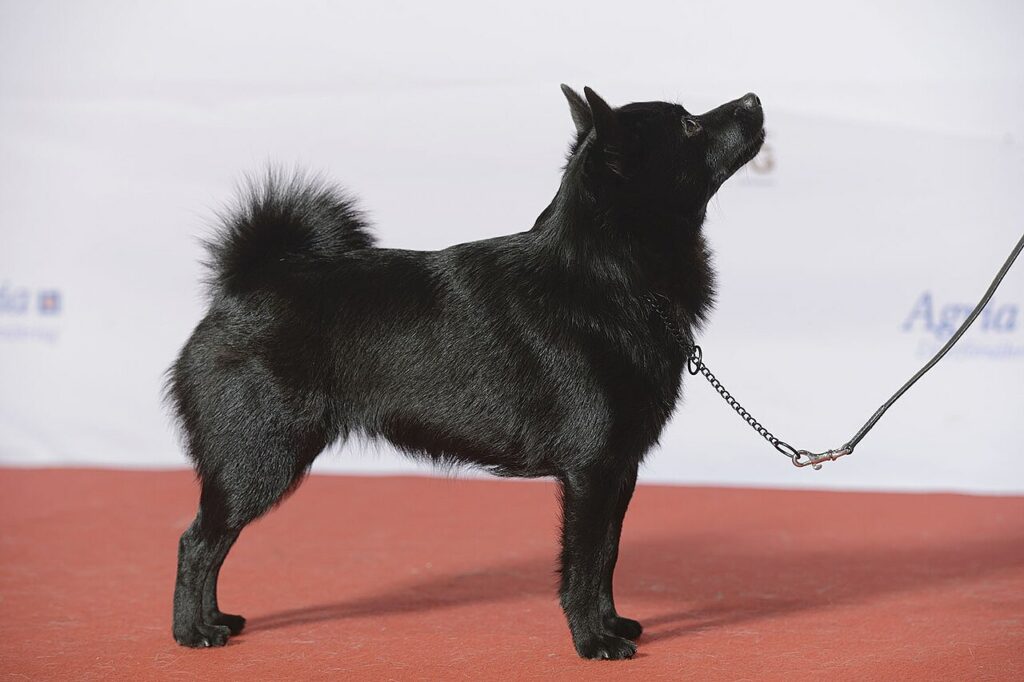
The Schipperke is a small, compact, black Belgian dog that looks like a fox in a tuxedo. Behind that tiny figure is a tireless guard, a born rodent hunter, and a companion with almost inexhaustible energy and curiosity. If you’re looking for a large dog tucked into a tiny body, the Schipperke fits perfectly.
Is the Schipperke for you?
Before you fall in love with his face, you should know what you’re up against. The Schipperke is not a lap dog: it’s a miniature worker with opinions of its own. Here you have the good and the not so comfortable, without ornaments.
In favour .
- Small enough to fit in almost any home.
- Very healthy and long-lived – often reaching 13-15 years or more.
- Excellent guardian: let me know everything that happens.
- Smart, sharp, and easy to motivate.
- Hair with no major complications, no need for a hairdresser.
- Resilient, athletic and always ready for adventure.
Against
- He barks, and quite frankly, he’s a convinced whistleblower.
- A lot of mental and physical energy to channel.
- Stubborn and independent; he does not obey “because he does”.
- Hunting instinct: he can shoot out after a cat or a rodent.
- It loosens hair, especially in the seasonal transitions.
- It tends to escape if it finds a gap: it’s a little Houdini.
Character and temperament

If I had to sum up the character of the Schipperke in one word, it would be “intensity”. It is a cheerful, active and permanently attentive dog to everything that happens around it. Nothing escapes it: every noise, every visit and every strange movement deserves its immediate inspection and, almost always, a barking comment.
This constant surveillance comes from the factory. For centuries his job was to patrol barges and workshops, so he has the role of sentinel etched into his genes. He is suspicious of strangers without becoming aggressive, and deeply loyal to his family, whom he follows from room to room like a black shadow.
He’s also extremely curious. He wants to know what’s inside every box, behind every door and at the end of every scent. That restless mind is wonderful, but it demands encouragement: a bored Schipperke invents his own entertainments, and you’ll rarely like them.
Coexistence: children, other pets, flat and loneliness
The Schipperke is adaptable, but its intensity dictates how it fits into each home.
- With children: gets along well with children who already know how to respect a dog and follow its rhythm in play. With babies or very young children it is advisable to supervise, because it does not tolerate sharp pulls well and can protest.
- With other dogs: usually coexists without problems, especially if he grows up socialized.
- With cats and small pets: if they’re raised together, they coexist, but their rodent-hunting instincts are very much alive, so hamsters, rabbits or loose birds are not a good idea.
- On the floor: by size fits perfectly in an apartment, with one important exception: you have to manage the barking so as not to end up antagonizing the neighbors.
- In the face of loneliness: is very attached and does not take long absences well. If he spends too many hours alone and without stimulation, barking, wrecking and escape behaviors appear.
Education and training
Here’s the Schipperke’s face and cross, it’s very intelligent and it learns fast, but it’s also independent and stubborn, so don’t expect a Labrador to be compliant.
The key is positive reinforcement and short, fun sessions. Rewards, play, and enthusiasm work; toughness and monotonous repetition just get him disconnected. Because he’s so smart, he’s quickly bored of repeating the same thing: you have to vary and pose small challenges.
He prioritizes three fronts from puppyhood. First, the early and broad socializing, to soften his natural distrust. Second, the control of barking, teaching him a “silence” command and rewarding calm before the habit sets in. And third, a it’s called solid., because his hunting instinct and his fondness for exploring can take him if he detects a prey or an open crevice.
Exercise and activity

Don’t be fooled by its size: the Schipperke has the energy of a big dog. It needs real daily activity, not a couple of trips to go to the toilet. A reasonable minimum is two good walks a day plus playtime, and it will appreciate any extras.
Where it really shines is in the exercise that combines body and head. Agility goes like a ring on its finger for its agility and speed, just like obedience, object-finding games or olfactory work at home. It is also an excellent companion for excursions and walks: it endures kilometers without removing its hair.
A Schipperke with enough physical and mental exercise is calm and balanced at home; one who is bored becomes a machine for barking, digging and testing doors. Mental stimulation counts as much as physical.
Care: fur and hygiene
The Schipperke wears a very peculiar double coat: a soft, woolly undercoat that insulates, covered by a somewhat rougher and longer outer coat.
The good news is that you don’t need a hairdresser or a haircut: your hair is easy to maintain. A weekly brushing is enough for most of the year to keep it clean and free of tangles. The bad news comes with the seasonal moods, in which you let go of the blowing coat: during those weeks you will brush daily to control the rain of hair around the house.
The rest of the hygiene is the usual routine: bathing only when really dirty, checking and cleaning ears, cutting nails when they ring when walking and, very importantly, regular dental care, since small breeds are prone to tartar.
Foodstuffs
The Schipperke is not particularly delicate to eat, but quantities do need to be monitored. As a small and very active dog, it needs a complete and high-quality food tailored to its size and activity level, divided into two daily servings better than one.
Their greatest enemy is overweight. As a good opportunistic eater, he easily gains weight if overfed or rewards are abused, and the extra pounds directly punish his joints and heart. Measure the rations, discount the prizes from the daily total, and periodically check that your waist is noticed and your ribs are felt effortlessly. Fresh water is always available and, if you have any questions about quantities or dietary changes, consult your veterinarian.
Health and life expectancy
The Schipperke is one of the healthiest and longest-living breeds in existence, with a life expectancy age of around 13-15 years, and it is not uncommon for some to live past the age of 15 and even reach 17 or 18.
Having said that, it is useful to know the pathologies to which the breed is most prone:
- Dislocation of the kneecap, a common joint problem in small dogs.
- If you have been diagnosed with Legg-Calvé-Perthes disease, a disorder of the hip.
- Epilepsia in some individuals, on a genetic basis.
- There is a DNA test (developed by the University of Pennsylvania) that allows responsible breeders to rule out carrier breeders.
The biggest daily risk, however, is not genetic but management: inactivity and overeating. A fat, sedentary Schipperke develops joint, dental, heart, and digestive problems that an active, weighted dog avoids completely. Buying from a serious breeder who does health checks and keeping the dog lean and moving are the two best investments in its longevity.
Physical appearance

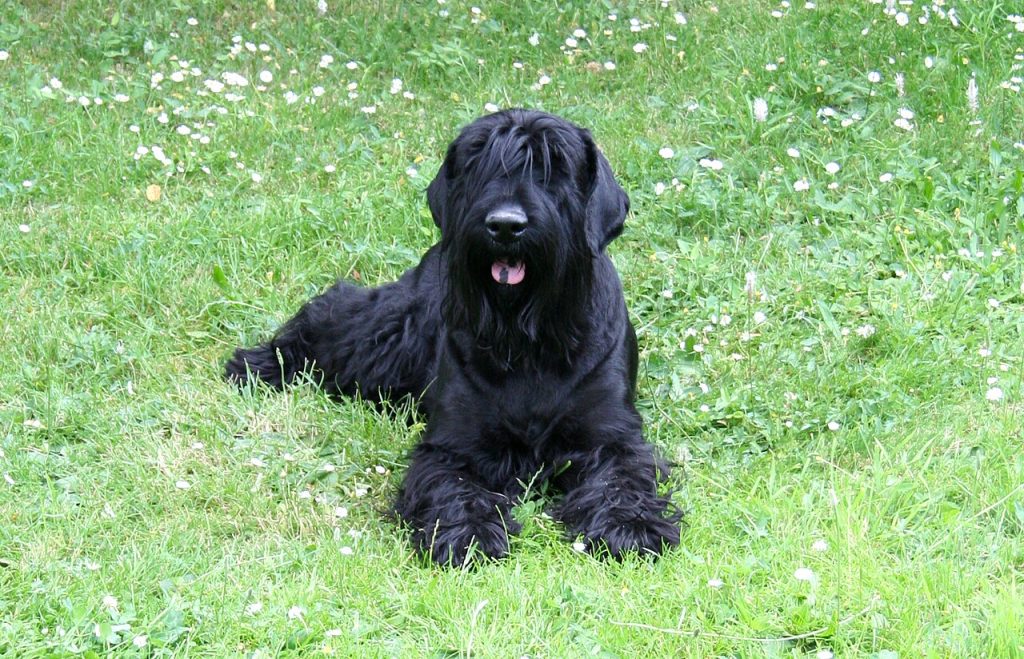
The Schipperke is a small, robust and stocky dog with square lines and looks unmistakably spitz. It measures around 31 to 33 cm at the cross and usually weighs between 3 and 9 kg, most being in an average stripe of about 4 to 7 kg.
Its most characteristic feature is its furry head, with a slightly rounded skull, a sharp snout, small, dark, lively eyes, and small, triangular, always stiff ears.
The body is compact and well proportioned, with a marked chest and a firm upper line. The tail is very short or almost non-existent, a trait historically obtained by amputation but which in many specimens appears naturally. The color par excellence is the solid and bright black; in rare cases there are specimens of cream or blonde tones, and even, very exceptionally, liver color.
Origin and history
The Schipperke is originally from Bélgica, specifically from the region of Flanders, and its roots go back at least to the 17th century. Its ancestor was the Leuvenaar, a larger black shepherd dog (around 18 kg) from the area of Leuven, which also gave rise to the black Belgian shepherd, the Groenendael.
Their name, in Flemish, is popularly translated as “little boatman”, in reference to the dogs that lived on the barges of the canals, where they hunted rats and mounted guard. Interestingly, experts point out that the term “scheper” (shepherd) sounds very similar to “schipper” (boatman), and that the most faithful translation of its origins would actually be “little shepherd”. Before its current name, it was also known as “Spits”, “Spitzke” or “Moorke” (the little black one).
There are records of very similar dogs in late 17th-century Brussels, especially among the city’s cobblers, who held eye-catching contests in which they showed off their dogs with handmade brass collars. The breed was formally recognized in the 1880s and its first standard was drafted in 1889, making it one of the oldest standard breeds. Much of what we know about its origins comes from articles in Chasse and Pêche magazine . Modern DNA studies confirm its close kinship with the spitz family, and very specifically with the Pomerania.
Curiosities
- Little war heroes: During World War II, the Belgian Resistance used Schipperkes to carry messages between hiding places without the Nazi occupation forces suspecting them.
- The legend of the tail: tells the tradition that a shoemaker, furious at losing a contest, cut off the winning dog’s tail.
- Misnamed: in the United States is often called the “Belgian barge dog”, a catchy but historically inaccurate name, as its primary function was never exclusively naval.
- Cousin from Pomerania: although it looks like a miniature sheepdog, its DNA is more closely related to the Pomeranian than to the Belgian Shepherd.
- Pequeño Houdini:‘s intelligence and curiosity make him an accomplished escapist; a poorly fenced garden is an invitation to adventure.
If you are attracted to the Schipperke’s sharp character and spitz print, you may be interested in other breeds in the same family or with a similar profile. Its closest genetic relative is Pomerania, another small, energy-filled spitz. If his Belgian Shepherd side calls, discover the stylish belgian Shepherd (Groenendael), with whom he shares an ancestor. And among the medium-sized spits stand out the sociable Keeshond and the vivacious Finnish Spitz.
Frequently asked questions about the Schipperke
Does the Schipperke bark a lot?
Yes, it’s a born warner and tends to bark at any noise or visitor, with early training to control the barking and enough exercise it can be managed, but it’s best to assume it’s a “talking” breed.
Is he a good dog for a flat or an apartment?
Because of its small size it is very well adapted to living on the floor. The only great condition is to work on the control of the bark and give it enough daily exercise so that it does not discharge its energy inside the house.
Do you lose a lot of hair?
The rest of the year it is moderate and is controlled with a weekly brushing, but in seasonal moulds it releases the undercoat abundantly for several weeks, during which it will need brushing almost daily.
How long does a Schipperke live?
It is a very long-lived breed – its life expectancy is about 13-15 years, and it is not uncommon for some specimens to reach 17 or even 18 years with good care.
Is he good with kids?
Yes, with children who already know how to treat a dog and follow the rhythm of play. With babies or very young children it is advisable to always supervise, because it does not tolerate sharp handling well.
Do you need a lot of exercise?
It needs daily physical activity and, above all, mental stimulation, without which it gets bored and starts barking, smashing and trying to escape.
Why don’t a lot of Schipperkes have tails?
Traditionally, their tails were amputated, a custom that was born, according to legend, from a breed contest.
Is it easy to train?
He’s very intelligent and he learns fast, but he’s also independent and stubborn, and he responds great to positive reinforcement and short, varied sessions, not repetition or harshness.