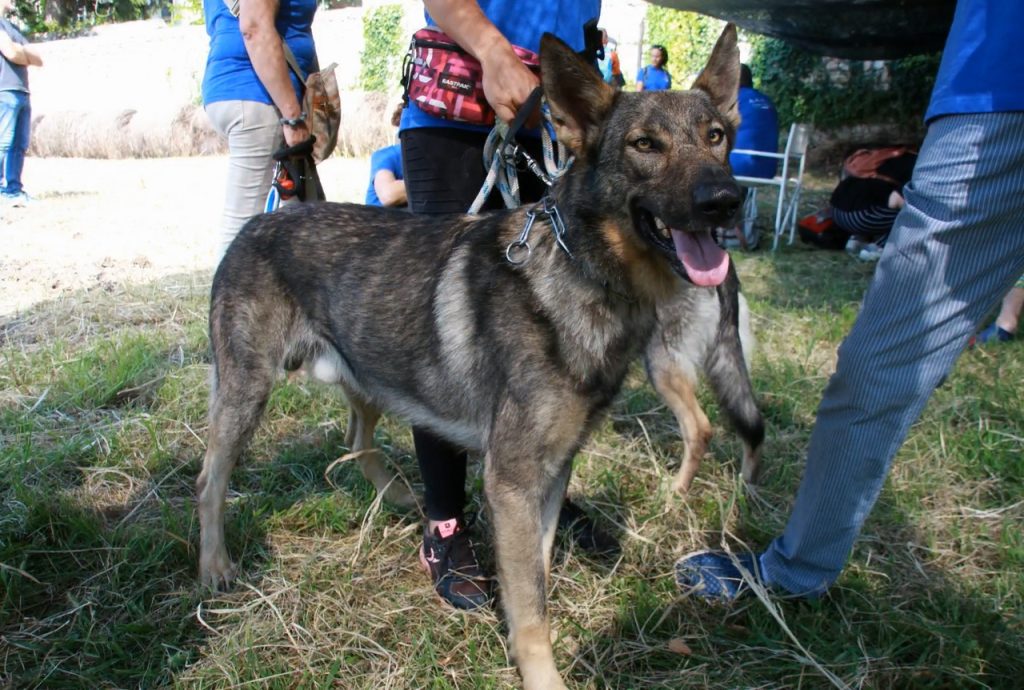
The Lupo Italiano is one of the most unique and rare breeds in Italy: a wolf-looking dog, bred as a working dog for search and rescue, which cannot be sold or freely adopted. Surrounded by legend – it was presented as a cross between a German shepherd and an Apennine wolf – and genetic controversy, the Italian Wolf is today a rare dog, managed by the State and reserved for volunteers and emergency services. In this tab you’ll see their real character, their care, their history and why getting one is almost impossible.
Is the Italian Wolf for you?

Before you become fascinated with its wolf image, you should be realistic. The Italian Wolf is not a companion dog for use or sale: it is a working, demanding dog, whose offspring is controlled by an association that only gives it to volunteers and rescue bodies. For the vast majority of people, having one simply isn’t an option. Still, understanding its profile helps you know what kind of dog it is.
In favour .
- Exceptional working dog for search and rescue.
- Very smart, resilient and agile in rough terrain.
- Strong bond and loyalty to their guide.
- Sober and natural-looking, wolf-like, very resistant to cold.
- Balanced temperament and not excessive barking.
Against
- It is not sold or adopted freely: access is very restricted.
- He needs a lot of exercise and mental stimulation.
- Not suitable for beginners or for sedentary or floor living.
- Primitive traits: requires socialization and firm leadership.
- A rare breed, with no FCI recognition and a very small population.
Character and temperament
The Italian Wolf is described as a balanced, awake, and deeply connected to his guide. dog. It was selected for its working character: sober, courageous and with a remarkable ability to concentrate on tracking tasks. It is not a nervous dog or barking without reason; rather reserved and observant, with that mixture of independence and attention that reminds of primitive dogs.
With its guide it shows a marked loyalty and a great willingness to cooperate, the basis of its success as a rescue dog. With strangers it tends to be cautious and somewhat distant, without gratuitous aggressiveness.
Coexistence: children, other pets, flat and loneliness

The coexistence of the Italian Wolf must be understood from its reality: it is a dog that lives with volunteers and operational units, not an ordinary domestic dog. With its reference nucleus it establishes a very strong bond and is usually tolerant if it has grown well socialized. With children it can be an attentive companion, always under supervision and with mutual respect, given its strength and energy.
With other pets, his primitive working dog instinct advises caution: Early socialization and guided coexistence are key, especially with small animals. As for the floor, it ‘s not your medium: He needs space, long walks and activity; a closed life makes him uncomfortable. And as for the loneliness, it does not tolerate prolonged isolation, as its balance depends on bonding and working with people.
Education and training
It is a very intelligent and very capable of learning. dog, qualities for which it was selected in rescue tasks. It learns quickly and enjoys working, but retains a point of independence that makes a coherent and positive education essential. The key is motivation, not strength: clear reinforcements, short sessions and meaningful goals for the dog.
The early socialization with people, environments and other animals is essential to polishing its reserved character. It needs an experienced guide, able to set stable boundaries without harshness. In expert hands it responds outstandingly in obedience and tracking work; in inexperienced hands, its energy and instinct can overflow.
Exercise and activity
The Italian Wolf has a very high need for exercise. It is made to move: touring mountains, tracking, working for hours on complicated terrain. A short walk is not enough for it; it requires intense physical activity and, above all, mental work to occupy its head. Tracking, olfactory games and search tasks are its natural element.
A well-exercised dog is balanced and easy to handle; a bored and out of energy dog can become tense or develop problematic behaviors. Therefore, he fits in with really active people and teams, who can offer him canine sport, demanding hiking or a purposeful job.
Care: fur and hygiene
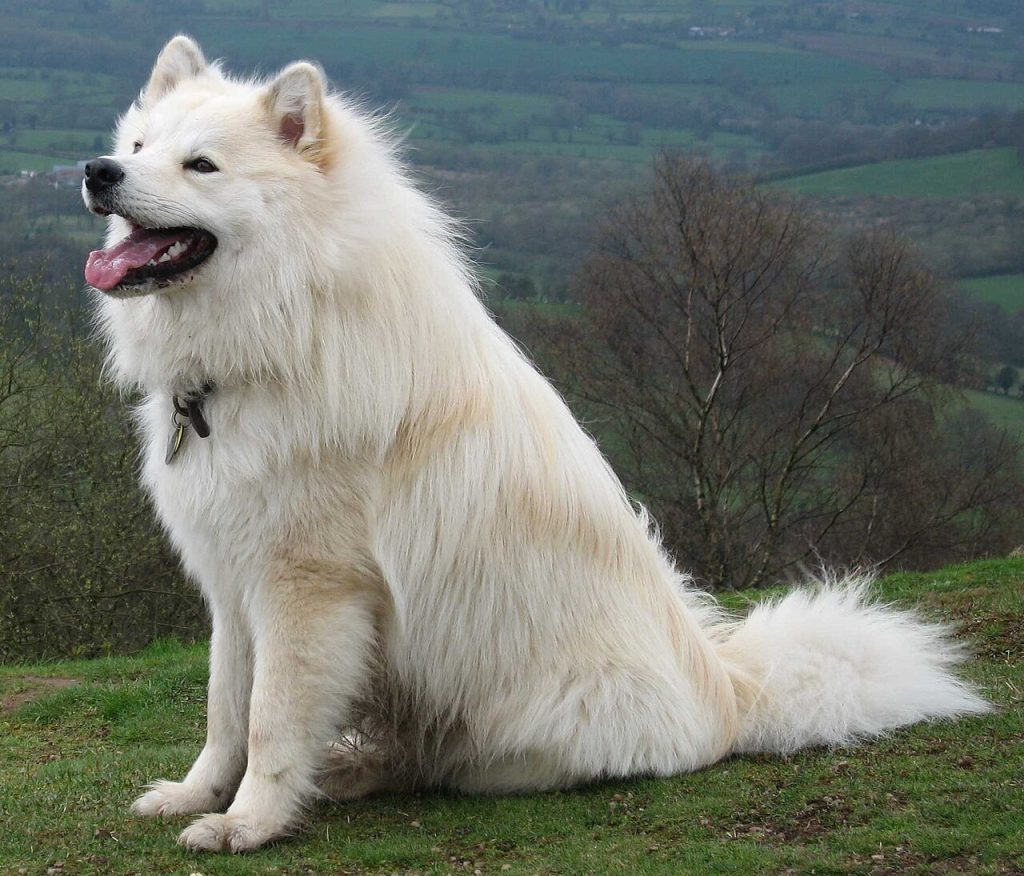
Its coat is double and functional, designed to insulate from the cold of the mountains, with a gray coat of lions or beige tones. The care is simple: a regular brushing, more frequent in moult seasons, keeps the coat healthy and controls loose hair.
The rest of the hygiene is the usual for a working dog: checking and cleaning the ears, checking the pads and nails – very demanded by the terrain – , dental hygiene and skin monitoring after field trips.
Foodstuffs
As an athletic and working dog, the Italian Wolf needs a complete and quality food, adjusted to its high energy expenditure.
It is advisable to distribute food to avoid large intakes before exercise – good practice in deep-breasted dogs – and always keep water available, especially after work. Monitoring weight and physical condition is the best guide: a rescue dog should be fibrous and fit, never overweight.
Health and life expectancy
As it is a rare breed, with a very small census and no official recognition, there is no consolidated catalogue of hereditary diseases as in the FCI breeds.
Even so, it shares a genetic basis with the German Shepherd, so caution is advised to watch for common features in large working dogs, such as joints. Preventive medicine – vaccination, deworming and checkups – is key, especially for their outdoor life. There is no official published longevity figure for the breed; it is reasonable to place it in the usual range of a well-groomed medium-sized working dog.
Physical appearance

The Italian Wolf has an unmistakable wolf air. According to the standard of its association, the adult male measures between 58 and 68 cm to the cross, with a robust but slender body: broad chest, back not too low and an athletic constitution designed for endurance.
The head resembles that of the wolf, with an elongated snout, powerful jaws and pointed ears of medium length. The eyes, oblique, ideally of gold color, reinforce that wolf look.
Origin and history
The history of the Italian Wolf is as singular as it is controversial. According to its creator, the former banker Mario Messi, the breed was born in 1966 from a hybrid called “Zorro”, the result of the crossing of an Apennine wolf – captured in the province of Rieti – with a German shepherd specializing in rescue.
In 1980 Messi founded an association to preserve the “purity” of the breed and decided that the Italian Wolf only be ceded for public utility tasks, never for sale. In 1987, a presidential decree recognized the association and an official registry was created; shortly thereafter, private ownership of the dog was banned by decree. The management, however, dragged serious economic and health problems for decades, with complaints about the condition of the facilities. In 2010 the administration intervened and the management of the breed passed to the current AAALI, the breeders’ and carers’ association that still controls their breeding.
Curiosities
- A dog that can’t be bought. is one of the very few breeds in the world whose sale is prohibited: it is only loaned to volunteers and rescue bodies.
- It’s an Olympic mascot. was proposed as the mascot and designated assistance dog of the 2006 Winter Olympics in Turin.
- The wolf controversy. Its creator went so far as to say it was “more wolf than dog”, but genetic analyses from 2007 and 2017 found no significant input from Italic wolves.
- Velocista. Messi claimed that he could reach about 70 km/h, a figure that is part of his legend rather than a verified data.
- State management. Their registration and breeding have been linked to Italian decrees and public bodies, something exceptional in the canine world.
If you are attracted to the Italian Wolf’s profile – a wolf dog, athletic and hardworking – you will likely enjoy learning about other breeds of great ability and strength of character, such as the Pastor Alemán, the breed’s genetic basis; the hardy Husky Siberiano, another Nordic air dog; the versatile Border Collie, a reference in intelligence and work; or the imposing Cane Corso, another Italian canine jewel.
Frequently Asked Questions About the Italian Wolf
Is the Italian Wolf a real wolfhound?
Its creator defended that the breed was born from the crossing of a German shepherd with an Apennine wolf, and spoke of a 30-35 % wolf blood. However, genetic studies published from 2007 onwards, and in particular the 2017 analysis of several Italian universities, found no significant trace of Italic wolf: The Italian wolf is most closely related to the German Shepherd. It’s practically a wolf-looking dog, not a proven hybrid.
Can you buy an Italian Wolf?
The breeding and management is in the hands of a non-profit association (the AAALI) which prohibits its sale. The specimens are loaned to selected volunteers, police forces and search and rescue units, with close monitoring.
Is it recognized by the FCI?
No. The Italian Wolf is not recognised by the FCI or the Italian Kennel Club (ENCI). It has its own standard set by its management association and an official register created by state decree, but has no FCI group or international pedigree.
What’s the Italian Wolf used for?
It was selected as a working dog, mainly for search and rescue in mountains, rubble and avalanches, as well as supporting tasks for civil protection.
How tall and how much does he weigh?
According to the association’s standard, the adult’s height at the withers ranges from 58 to 68 cm. It is a medium-sized dog, of athletic constitution and enjuta, with a robust chest and not too low back.
What color is the coat?
The typical coat is gray with leonoid or beige hues, very similar to that of a wolf.
Is he a good dog to live in a flat?
It is not the ideal choice. It is a working dog with a lot of energy, a great need for exercise and a close bond with its guide. It fits better with active people, with space and experience, able to give it daily activity and mental stimulation. In any case, its free adoption is not allowed.
Is he aggressive or dangerous?
It has no reputation as an aggressive dog towards people: it is described as balanced, very attached to its guide and worker. It does retain traits of primitive and working dog, so it needs early socialization, clear boundaries and an expert hand.